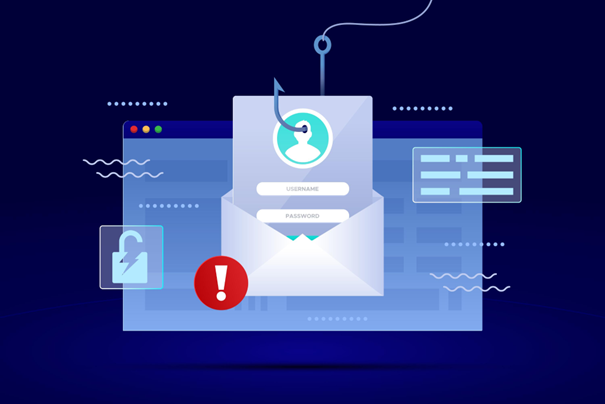
Deepfakes, Vishing, and AI: The Next Frontier of Cyber Manipulation
December 31, 2025
Topics
- deepfakes
- vishing
- AI
- cybersecurity
December 31, 2025
Topics
Rather than targeting software flaws, many attackers focus on influencing how people think and respond. AI allows social engineering attacks to scale rapidly while adapting messages to individual victims with minimal effort. For example, phishing emails are designed to sound exactly like a victim’s real coworker and voice scans that replicate a CEO’s voice. This shift has exposed limitations in many security controls that were designed for earlier threat models and are no longer as effective as they once were.
Phishing emails often used to be poorly written, full of spelling errors, and pretty easy to identify. Nowadays, modern AI systems enable attackers to generate large volumes of messages that closely resemble everyday workplace communication. Attackers can also now use AI to leverage online information that reveals personal, organizational, and operational details, allowing them to craft messages tailored to specific individuals and roles (often referred to as spear phishing). Victims might receive messages related to real projects, coworkers, and recent events, which makes the messages much more believable.
In addition, AI-powered social engineering attacks are much harder to stop because they don’t rely on malware or system vulnerabilities; the success of these attacks depends on persuasion rather than exploiting software weaknesses. Filtering systems often fail when malicious messages closely resemble routine internal communication. AI-driven attacks are also much more persistent and scalable than those using traditional social engineering methods.
Cybercriminals can pull short audio samples from public videos, phone calls, or social media posts, and use them to generate highly convincing voice imitations. These imitations are then used in vishing attacks where victims will receive phone calls that sound exactly like their manager, executive, family member, etc. There have been cases where the replicated boss’s voice was used to instruct employees over the phone to take immediate actions such as authorizing payments or disclosing protected information. These attacks are able to get around many traditional security measures due to the authentic-sounding requests.

The consequences of successful AI-based social engineering can be severe. Data breaches, financial loss, ransomware infections, and reputational damage are some things it could lead to. Because of the nature of the attacks, even organizations with strong technical defenses are vulnerable. Human decision-making now represents one of the most significant security vulnerabilities.
Employees must be trained to recognize more subtle warning signs, confirm unexpected or high-risk requests using an independent method of communication, and slow down when faced with urgency or pressure. Stronger identity verification processes should be implemented for things like financial transactions and sensitive data requests. Controls that require multiple forms of confirmation before sensitive actions are completed can help prevent a single manipulated interaction from leading to a major incident. On the flip side, AI-powered detection tools are being developed to help spot social engineering attacks through anomalies in communication patterns, writing style, and voice characteristics.
As AI improves, so will AI-driven social engineering. The best way to stay protected from these more intelligent attacks will be to properly invest in both people and technology. Awareness, verification, and adaptability will become more important than ever.

January 27, 2026
Quantum computing applies the laws of quantum physics to information processing, enabling certain calculations to be performed far...

December 18, 2025