Securing Orbital Satellites
September 24, 2026
Topics
- Cybersecurity
- satellites
- space
September 24, 2026
Topics
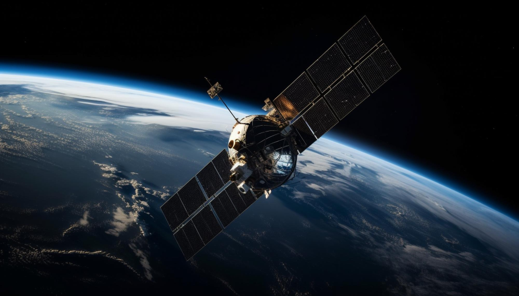
Satellites are used for many different purposes in modern society. These include communication, navigation, weather monitoring, GPS, television, internet services, military operations, and collecting information. As more organizations depend on satellites, cybersecurity has become an increasingly important part of protecting space-based systems. Modern satellites operate as part of larger interconnected systems, which creates additional opportunities for attackers to target them. Securing a satellite deployed in orbit is different from securing a typical computer or network on Earth. Once a satellite is launched, physically accessing and repairing it can be extremely difficult or impossible. This means cybersecurity needs to be considered before launch and throughout its entire use. A successful attack could potentially interfere with communications, alter data, disrupt services, or affect the ability of operators to control the spacecraft. Because of this, satellite security needs to include the satellite itself, the communication links, ground stations, software, supply chain, and the people operating the system.
One of the first steps in securing satellites is understanding what can actually be attacked. It can include the satellite bus, payloads, antennas, communication links, ground stations, mission control systems, software, networks, and other connected systems. This creates a large attack surface. An attacker does not necessarily have to compromise the satellite directly to cause problems. They could instead target a ground station, employee account, third-party vendor, network connection, or software component that eventually connects with the satellite. This is why satellite cybersecurity needs to look at the entire system instead of just focusing on the spacecraft.
One of the most important parts of satellite security is protecting communications between the satellite and the ground. Satellites constantly send and receive information, including telemetry, commands, and mission data. If these communications are not properly protected, attackers may be able to intercept, disrupt, or manipulate transmitted information. Encryption can help protect sensitive information from being intercepted, while authentication can help ensure that commands actually come from an authorized source. Satellite operators should also use strong key management practices and regularly review who has access to cryptographic keys. Protecting communications is especially important for satellite command and control. A malicious command could potentially cause serious problems if an attacker were able to make it appear legitimate. For this reason, satellite systems should authenticate and validate commands before allowing them to affect critical spacecraft functions.
Even though the satellite is located in space, many of the systems used to control it are located on Earth. Because of this, ground stations are a big target for attackers. Organizations should protect these systems using strong authentication, access controls, network segmentation, encryption, monitoring, and regular security testing. Employees should only have access to the systems and functions they need. Multi-factor authentication can also make it much more difficult for an attacker to gain access using stolen credentials. Network segmentation should be used so that compromising a standard computer does not automatically provide access to systems capable of sending commands to a satellite. Separating mission-critical systems from normal business networks can reduce the damage caused by a successful intrusion.
Satellites depend heavily on software and firmware to operate. These systems control different functions of the spacecraft, communicate with ground stations, process data, and sometimes manage navigation and other critical functions. If an attacker compromises the software, they could potentially interfere with the operation of the satellite. Software and firmware should therefore be securely developed, tested, and updated. Software updates should be authenticated before installation to help prevent unauthorized or malicious code from being uploaded to the satellite. Organizations should also maintain secure development practices and carefully track software dependencies. This is especially important because a satellite can remain in orbit for years. Security vulnerabilities that were not known when the satellite launched could become a problem later. The ability to securely update software can therefore be an important part of maintaining security throughout the satellite’s operational lifetime.

Another major concern is the satellite supply chain. Satellites are built using components, software, hardware, and services from many different organizations. This means a security problem can potentially be introduced before the satellite is even launched. Organizations should evaluate vendors and suppliers, verify the authenticity of hardware and software, and understand where important components come from. They should also perform security testing before components are integrated into the final satellite system. Supply chain security is important because strong organizational security controls may not prevent risks introduced through a compromised third-party component.
Not everyone involved with a satellite mission needs access to every system. Access should be based on the employee’s role and the functions they need to perform. This follows the principle of least privilege, which limits the amount of access available to each user. Administrative accounts should receive additional protection because compromising one of these accounts could give an attacker significant control over important systems. Multi-factor authentication, strong passwords, privileged access management, and regular access reviews can reduce the risk. Organizations should also remove accounts that are no longer needed and regularly review who has access to mission systems. This becomes even more important when contractors, vendors, and multiple organizations are involved in operating a satellite.
Security controls cannot prevent every attack, so satellite operators also need to monitor their systems for suspicious activity. Security teams should monitor ground networks, user accounts, communication systems, and satellite telemetry for unusual behavior. For example, unexpected login attempts, unusual commands, abnormal network traffic, or changes in satellite behavior could indicate that something is wrong. Detecting these signs early can give operators more time to investigate and respond before an incident becomes more serious.
Satellite operators also need to prepare for the possibility that their security controls will fail. Having an incident response plan is important because an organization needs to know what to do if a satellite station or ground station is compromised. Organizations should develop and test procedures for situations such as unauthorized access, compromised ground systems, malicious software, communication disruptions, or suspicious commands. Backup communication methods and recovery procedures can also improve resilience. Testing these plans before an actual incident is important. A response plan that looks good on paper may not work as expected during a real attack. Regular exercises can help organizations identify weaknesses and improve their response procedures.
Satellites are becoming more important to everyday life, businesses, governments, and critical infrastructure, making them increasingly attractive targets for cyberattacks. Securing a satellite deployed in orbit requires more than just protecting the spacecraft. Organizations need to secure the entire system, including the satellite, ground stations, communication links, software, supply chain, and personnel. Strong encryption, authentication, access controls, secure software, supply chain security, network segmentation, monitoring, and incident response can all help reduce the risk of a successful attack. Security should also be considered during the design and development of a satellite instead of being added after it has already launched. Unlike many systems on Earth, a satellite generally cannot be physically accessed and repaired once it is in orbit. Because physical access can be extremely difficult, cybersecurity needs to be built into the system from the beginning. As more critical services depend on space-based technology, protecting satellites and their supporting infrastructure will become an increasingly important part of cybersecurity.
September 8, 2026
Passwords have been the typical option for people to protect online accounts for decades. Almost everything from social media to b...

September 8, 2026
Voting is one of the most important parts of the democratic process in the United States. As technology has become a bigger part o...