The Missing Link: End User Training
August 14, 2026
Topics
- cybersecurity
- training
- social engineering
August 14, 2026
Topics
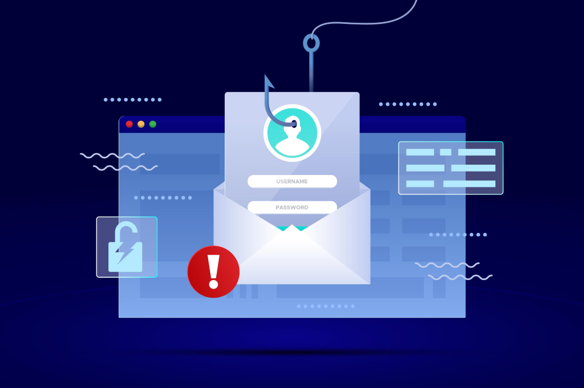
Cybersecurity is often thought of as a technology problem. Organizations spend tons of money on firewalls, endpoint protection, multi-factor authentication (MFA), intrusion detection systems, and other security tools. While these technologies are important, there are limits to what they can do. One wrong click by an employee can bypass most of those defenses. This is why end-user cybersecurity training is often considered the missing link in an organization’s overall security strategy. Cybercriminals frequently target people because human behavior can create opportunities to get around security controls. Instead of spending weeks exploiting technical vulnerabilities, attackers often rely on phishing emails, fake websites, phone scams, or social engineering to trick someone into revealing credentials or downloading malware. Even organizations with strong security controls can suffer a breach if employees are not trained to recognize these threats.
Most employees are not cybersecurity experts. Attackers take advantage of this by creating messages that look legitimate and create a sense of urgency. An employee may receive what appears to be an email from their manager asking them to review an attachment, or a fake message from Microsoft asking them to reset their password immediately. If the employee acts without thinking, they may unknowingly give an attacker access to company systems. Phishing is an effective attack method because it exploits human behavior rather than relying solely on technical vulnerabilities. Modern phishing attacks are also becoming much more convincing with the help of artificial intelligence, making fake emails more realistic and harder to identify. Voice cloning, AI-generated messages, and realistic fake websites are making social engineering attacks even more effective than they were just a few years ago.
Technology alone cannot stop every attack. Security awareness training helps employees recognize common threats before they become security incidents. Good training teaches users how to identify suspicious emails, verify unexpected requests, create strong passwords, use multi-factor authentication, and report anything that seems unusual. However, simply requiring employees to watch a yearly training video is not enough. People forget information over time, especially if they rarely encounter security threats during their daily work. Training should be continuous and updated regularly to address new attack techniques. Short lessons, interactive examples, and simulated phishing campaigns can help reinforce security awareness over time. Ongoing security awareness programs can help organizations improve employees’ ability to identify and report suspicious activity. Employees become another layer of defense instead of being the weakest link.
Many successful cyberattacks begin with simple mistakes that could have been prevented through better awareness. Some common ones are clicking links without verifying where they lead, opening unexpected email attachments, reusing passwords across multiple accounts, ignoring software updates, sharing sensitive information with someone who has not been properly verified, connecting work devices to unsecured public WiFi networks, and using personal email or cloud storage for company files. Most employees do not make these mistakes intentionally. They usually happen because someone is busy, distracted, or unaware of the risks.

Security awareness should become part of an organization’s culture. Employees should feel comfortable reporting suspicious emails without worrying about being blamed if they almost clicked on something malicious. In many cases, reporting an attempted attack early allows security teams to block it before anyone else is affected. In addition, when managers and executives follow security policies themselves, employees are much more likely to take them seriously. Cybersecurity should be viewed as everyone’s responsibility. Organizations can also reinforce good habits by sending regular security tips, discussing recent cyberattacks during team meetings, and recognizing employees who report phishing attempts or other suspicious activity.
Providing training is only one part of the process. Organizations should also measure whether it’s actually improving employee behavior. Simulated phishing campaigns are a useful way to evaluate security awareness because they show how employees respond to realistic situations without exposing the organization to an actual attack. Other useful measurements are the number of phishing emails reported, reductions in risky behaviors, participation rates, and how quickly employees report suspicious activity. These metrics can help identify departments or individuals who may need more training while also showing whether the overall security program is improving over time.
As artificial intelligence continues to evolve, cybercriminals are finding new ways to automate phishing campaigns, generate convincing fake messages, and impersonate trusted individuals. Because of this, employee awareness will become even more important in the coming years. Organizations may also start using realistic simulations that adapt to current attack trends, giving employees hands-on experience before they encounter a real attack. While technology will continue to improve, there will always be a human element in cybersecurity. Organizations that combine strong technical defenses with well-trained employees will be much better prepared to defend against modern cyber threats.
Many organizations focus heavily on buying the latest cybersecurity tools while overlooking their employees. Firewalls, antivirus software, and advanced detection systems are valuable, but they cannot stop someone from voluntarily giving away their credentials or clicking on a malicious link. End-user cybersecurity training helps close that gap by teaching employees how to recognize threats before they become incidents. When training is continuous, engaging, and supported by a strong security culture, employees become an active part of the organization’s defense instead of a vulnerability. As cyberattacks continue to become more sophisticated, investing in people will remain just as important as investing in technology.
https://www.cisa.gov/resources-tools/resources/avoiding-social-engineering-and-phishing-attacks
https://www.cisa.gov/secure-our-world
https://www.nist.gov/cyberframework
https://www.nist.gov/itl/applied-cybersecurity/nice
https://www.ibm.com/reports/data-breach

August 14, 2026
Hospitals use devices that are connected to the internet every day. These medical devices include things like MRI scanners, patien...

July 27, 2026
The Internet of Things (IoT) has become a large part of everyday life. Devices such as smart thermostats, home security cameras, f...